Tooth extraction is sometimes necessary when a tooth is badly damaged, severely decayed, infected, or creating problems for surrounding teeth. While the procedure itself is important, what happens afterward plays a major role in how well the area heals.
Proper aftercare can help reduce discomfort, protect the extraction site, and lower the risk of complications. If you are preparing for a dental extraction in Napanee, knowing what to expect during recovery can make the process easier to manage.
Once the tooth is removed, a blood clot begins to form in the empty socket. This clot protects the underlying bone and nerves while new tissue starts to develop.
Mild bleeding, swelling, tenderness, and numbness are common shortly after the procedure. Your dentist may place gauze over the extraction site and ask you to bite down gently to help control bleeding.
During the first few hours, avoid touching the area with your tongue or fingers. Protecting the blood clot is one of the most important parts of dental extraction aftercare.
The first day is usually when the extraction site needs the most care.
Keep the gauze in place for the amount of time recommended by your dentist. If bleeding continues, replace it with clean gauze and apply gentle pressure.
Some light oozing may occur, but heavy or persistent bleeding should be discussed with your dental provider.
Minor swelling is common after an extraction. Applying a cold compress to the outside of the face for short intervals may help during the first day.
Use pain medication only as directed by your dentist or according to the product instructions.
Plan to take it easy after the procedure. Strenuous exercise, heavy lifting, or bending over repeatedly may increase blood flow to the area and interfere with clot formation.
Food choices can make a noticeable difference during tooth removal recovery.
Soft foods are usually easier to manage during the first few days. Options may include:
Avoid foods that are hard, crunchy, sticky, or difficult to chew. Chips, nuts, popcorn, tough meats, and similar foods may irritate the extraction site.
Very hot foods and drinks should also be avoided early in recovery. Alcohol may interfere with healing or interact with certain medications, so follow your dentist's instructions.
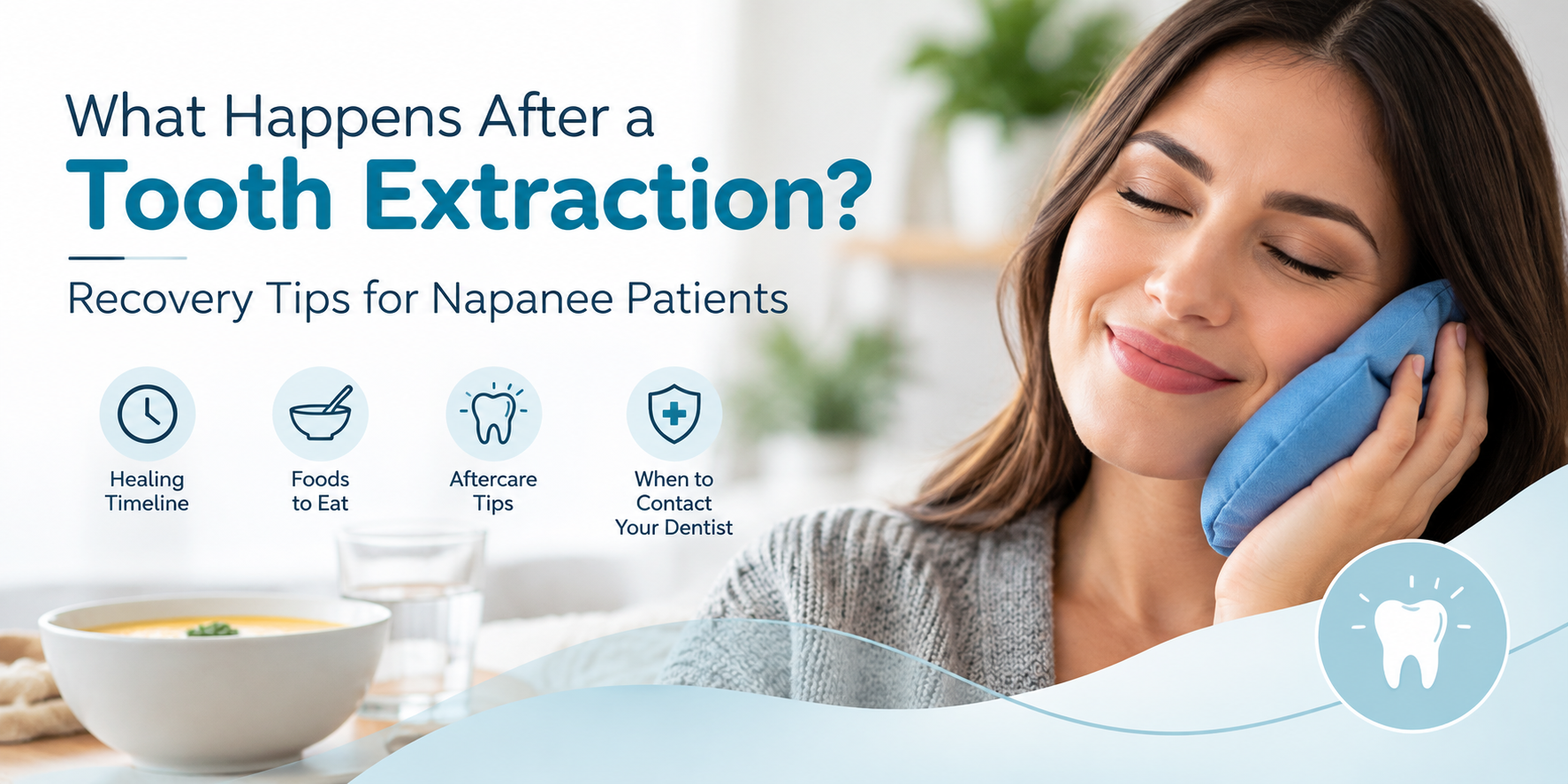
Tooth extraction healing time varies depending on the type of extraction, the location of the tooth, and the patient's overall health.
During the first 24 to 48 hours, swelling and tenderness may be most noticeable. Many patients begin feeling more comfortable over the next several days.
The gum tissue usually continues healing over the following weeks, while deeper bone healing takes longer. Surgical extractions may require a longer recovery period than simple extractions.
If you are concerned about tooth extraction recovery in Napanee, your dentist can provide guidance based on your specific procedure.
Good habits during recovery can help protect the extraction site.
Continue brushing and flossing the rest of your teeth, but be gentle around the extraction site. Avoid aggressive brushing directly over the socket.
Follow any rinsing instructions provided by your dentist.
Smoking and vaping can interfere with healing and increase the risk of complications. Suction and exposure to smoke may disturb the blood clot.
Drinking through a straw creates suction inside the mouth. That pressure may dislodge the blood clot, so it is usually best to avoid straws during the early healing period.
Take prescribed medications as directed and attend any recommended follow-up appointments. Aftercare instructions may vary depending on the type of extraction performed.
Dry socket is a complication that can occur when the protective blood clot becomes dislodged or fails to develop properly.
Without the clot, the bone and nerves inside the socket may become exposed. This can cause significant pain and delay healing.
Following extraction instructions carefully, avoiding smoking, and staying away from straws can help reduce the risk.
Some temporary symptoms are expected after an extraction.
These may include mild swelling, tenderness, slight bleeding, or discomfort when chewing. In most cases, these symptoms should gradually improve rather than become worse.
The exact recovery experience varies from person to person.
You should contact your dentist if your symptoms become severe, unusual, or fail to improve.
Warning signs may include:
Prompt dental care can help determine whether further treatment is necessary.
A few simple habits can support the healing process.
Drink enough water, eat nutritious soft foods, get adequate rest, and avoid unnecessary pressure on the extraction site. Keep your mouth clean without disturbing the socket and follow all instructions provided after the procedure.
If something does not feel right, contact your dentist rather than waiting for the problem to become more uncomfortable.
Patients who need a dental extraction in Napanee can benefit from professional evaluation before and after the procedure. At Smile Shapers, treatment recommendations are based on the condition of the tooth, your oral health, and your individual needs.
Clear aftercare instructions can help you understand what to expect and how to protect the extraction site while it heals.
If you are experiencing dental pain, have concerns about a damaged tooth, or need advice about recovery after an extraction, schedule a consultation with a dentist in Napanee, ON.
Mild discomfort may last for several days, but it should generally improve over time.
Many patients start with soft foods and gradually return to their normal diet as the area becomes more comfortable.
You can usually continue brushing your other teeth, but avoid brushing directly over the extraction site during the early healing stage.
Pain, swelling, and tenderness should gradually decrease. If symptoms become worse instead of better, contact your dentist.
Severe pain that develops or worsens several days after extraction may require dental evaluation.
Successful tooth extraction recovery depends on protecting the extraction site and following proper aftercare instructions. Rest, careful food choices, good oral hygiene, and avoiding habits that disturb the blood clot can all support healing.
If you are planning a dental extraction in Napanee or have questions about recovery, contact Smile Shapers for professional guidance and personalized dental care.