-svg.svg)
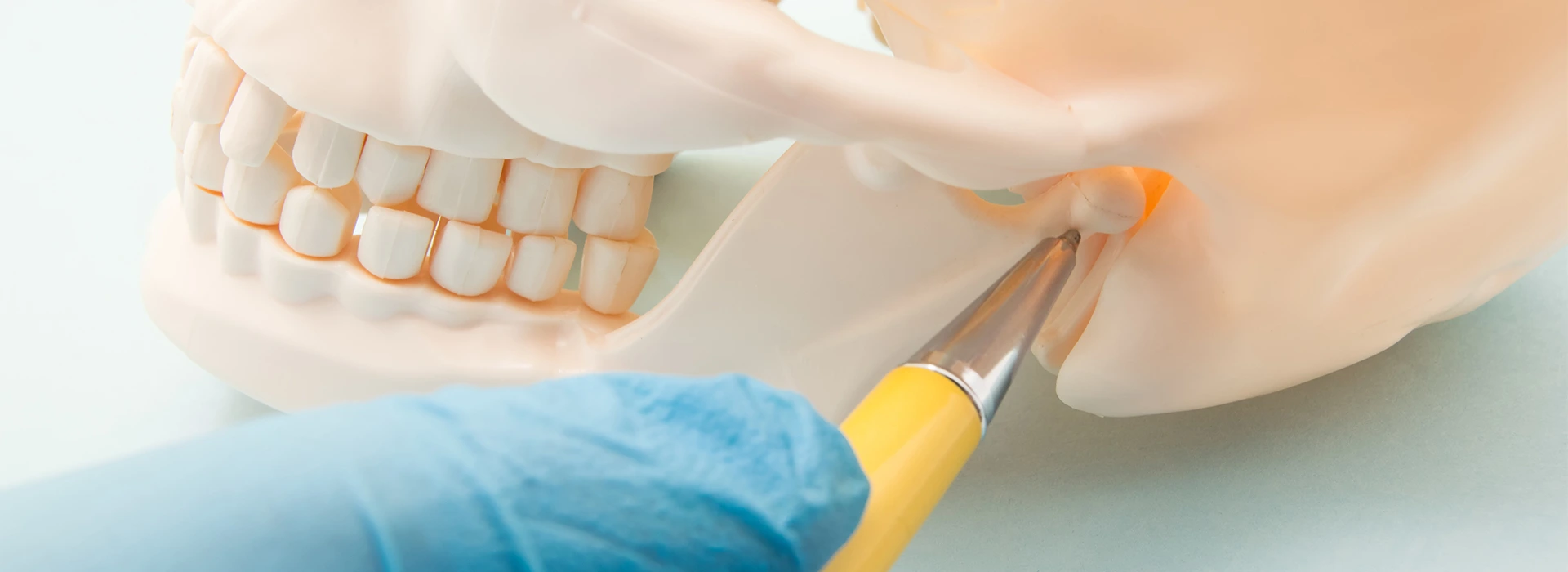
Jaw discomfort can show up in different ways. You may hear a click when opening your mouth, feel soreness after eating, wake up with tight jaw muscles, or notice that opening your mouth fully has become uncomfortable. These symptoms can sometimes involve the temporomandibular joints (TMJs), which connect the lower jaw to the skull.
An occasional painless click doesn't necessarily indicate a problem. However, recurring pain, restricted movement, or discomfort that interferes with eating deserves attention. For patients considering TMJ treatment in Napanee, an assessment can help identify what's contributing to the symptoms and which approach may be appropriate.
You have two temporomandibular joints, one on each side of your head, located just in front of your ears. They work with muscles and ligaments to control jaw movement.
These joints are involved whenever you:
Problems involving the joints, surrounding muscles, or structures that control jaw movement are commonly referred to as temporomandibular disorders (TMD).
Because several conditions can cause similar symptoms, jaw pain shouldn't automatically be assumed to be TMD without an assessment.
There isn't one single cause of TMJ-related discomfort. Symptoms may develop from a combination of factors.
Possible contributors include:
Repeatedly clenching or grinding your teeth places additional pressure on the jaw muscles and joints. Many people do this while sleeping and don't realise it.
An impact to the face or jaw can affect the joint and surrounding tissues, sometimes leading to ongoing discomfort or changes in movement.
Like other joints in the body, the TMJ can be affected by certain forms of arthritis.
Frequent gum chewing, biting hard foods, or other habits that repeatedly stress the jaw may contribute to muscle fatigue and discomfort.
The TMJ contains a small disc that helps the joint move smoothly. Changes in the position or function of this disc can sometimes contribute to clicking, popping, or restricted movement.
Determining the likely cause is an important part of choosing appropriate TMJ therapy in Napanee.
TMJ-related problems don't feel the same for everyone.
Symptoms may include:
Some people experience clicking without any pain or limitation. Others may have significant muscle discomfort without noticeable joint sounds.
The pattern and duration of symptoms help your dentist determine whether further evaluation is needed.
Jaw clicking is common and doesn't always require treatment.
A clicking or popping sound can occur when structures within the joint move as the mouth opens and closes. If the sound occurs without pain, locking, or restricted movement, treatment may not be necessary.
It becomes more important to have the jaw evaluated when clicking is accompanied by:
Rather than treating the sound itself, the goal is to determine whether an underlying joint or muscle problem is present.
Yes. Grinding and clenching can overwork the muscles responsible for jaw movement.
People who grind their teeth at night may wake up with:
Your dentist may also notice flattened chewing surfaces, small fractures, or other evidence of excessive tooth wear during an examination.
When grinding contributes to jaw symptoms, addressing the habit and protecting the teeth may form part of the treatment plan.
A proper assessment is important because headaches, ear-area discomfort, tooth problems, muscle strain, and other conditions can sometimes produce similar symptoms.
During an evaluation, your dentist may ask:
The examination may include checking jaw movement, facial muscles, the joints, your bite, and signs of tooth wear.
Imaging may be recommended in certain situations when additional information about the joint or surrounding structures is needed.
There is no universal treatment for every TMJ problem. Care depends on the cause, severity, and duration of symptoms.
Treatment may begin conservatively.
Temporary changes, such as avoiding gum chewing, hard foods, and habits that require excessive jaw movement, may help irritated muscles and joints settle.
If grinding is contributing to the problem, your dentist may discuss strategies for protecting your teeth and reducing strain.
An oral appliance may be recommended for some patients based on their individual needs.
Damaged teeth, significant tooth wear, or other dental concerns may need to be addressed as part of the overall treatment plan.
Persistent or complex TMJ conditions sometimes require collaboration with other healthcare professionals. The appropriate referral depends on the suspected cause and severity of the condition.
Effective jaw pain treatment in Napanee should focus on the underlying problem rather than simply treating the symptoms.
Mild jaw soreness after unusually heavy chewing may improve on its own. Persistent or recurring symptoms are different.
Consider scheduling an assessment if:
Severe swelling, significant trauma, or sudden inability to open or close the jaw normally requires prompt professional evaluation.
Jaw pain can have several possible causes, which is why treatment should begin with an individual assessment.
Smile Shapers Napanee offers TMJ therapy in Napanee as part of its dental services. Our team can evaluate your jaw movement, teeth, bite, and symptoms to better understand what may be contributing to your discomfort.
When appropriate, treatment may involve conservative measures, management of grinding or clenching, an oral appliance, dental treatment, or referral for additional evaluation.
The objective is to address the source of the problem while protecting your teeth and supporting comfortable jaw function.
No. Painless clicking can occur without requiring treatment. Clicking accompanied by pain, locking, or restricted movement should be assessed.
Stress can be associated with increased clenching or grinding in some people, which may contribute to muscle tension and jaw discomfort.
A dentist can evaluate the teeth, bite, jaw movement, muscles, and signs of grinding to determine whether dental factors may be contributing to your symptoms.
Not everyone does. Oral appliances may be appropriate in certain cases, particularly when grinding or clenching is involved. Treatment should be based on an individual assessment.
Some mild symptoms improve with reduced strain and time. Persistent, worsening, or recurring symptoms should be professionally evaluated.
Jaw clicking alone may not be a reason for concern, but recurring pain, stiffness, locking, or difficulty chewing shouldn't be ignored. Because several conditions can produce similar symptoms, identifying the cause is more useful than trying to manage the discomfort without a diagnosis.
If you're experiencing ongoing jaw discomfort and looking for TMJ treatment in Napanee, contact Smile Shapers Napanee to schedule an assessment and discuss the treatment options appropriate for your needs.